Friday, September 17, 2010

Leave it to the Europeans to come up with a new place to do it in an airport.


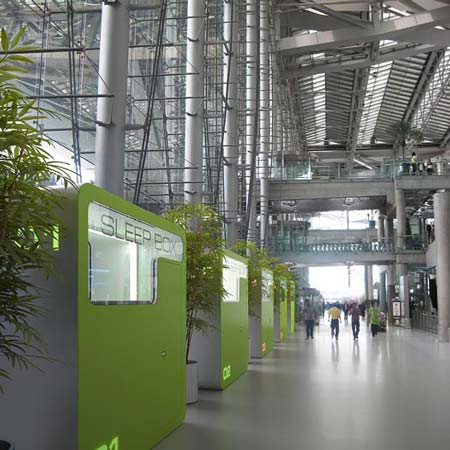
SLEEPBOX
Imagine that you are in a city where you are not a local resident, and you have not booked a hotel. If you're anything like me you rarely make plans when you travel and often find yourself looking for a place to sleep at midnight. A Russian architecture firm has developed what they believe is a solution to this dilemma. The call it  the Sleepbox.


Sleepbox is a small mobile space (box) 2mx1.4mx2.3m (h). The main functional element in it is a bed 2×0.6 m, which is equipped with automatic system of change of bed linen. Bed is soft, flexible strip of foamed polymer with the surface of the pulp tissue. Tape is rewound from one shaft to another, changing the bed. If a client wants to sleep in maximum comfort, he can take the normal set of bed linen for an extra fee.

Thursday, September 16, 2010

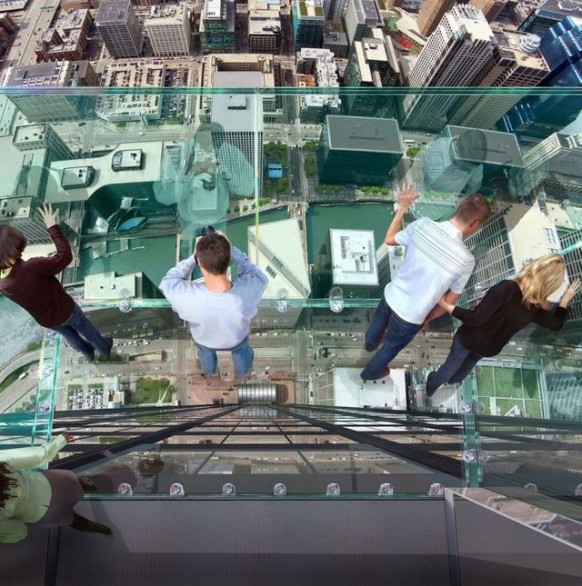
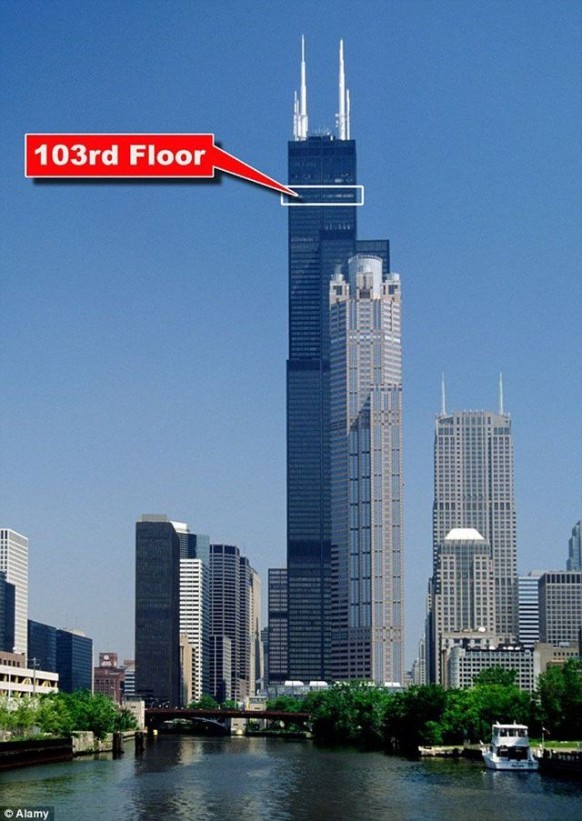
What 'chu talkin' 'bout Willis Tower?

Willis Tower, formerly named Sears Tower, is a 108-story 1,450 feet (442 m) skyscraper in Chicago, Illinois. This tallest skyscraper in the United States has four glass box viewing platforms. These balconies are suspended 1,353 feet (412 m) in the air on the 103rd floor. As per reports, the inspiration for The Ledge came from hundreds of forehead prints visitors left behind on Skydeck windows every week.


Itty Bitty Cities: These guys are good.

 You’re looking at one of the largest complete miniature cities in the world. At over 1,000 square feet, this massive scale model of Shanghai covers more ground than many apartments. It’s a projection of what the city will look like in the year 2020, with current buildings and planned buildings standing in this dazzling display. The model is currently in the Shanghai Urban Planning Museum.

 The story behind this incredible model of Manhattan is almost as amazing as the model itself. It was built over the course of about 2,000 working hours by software engineer Michael Chesko. He wasn’t building the model in a professional capacity; he was simply having fun. He hand-carved each tiny piece from balsa wood using nothing more than an X-Acto knife, a nail file, and a Dremel. The impressive 1:3200 model now rests in New York’s Skyscraper Museum after being hand-delivered by Chesko and his wife; amazingly, neither had ever set foot in the city before that day.


The Bay Model is one of America’s most well-known models. It doesn’t depict an entire city; rather, it is a scale reproduction of the San Francisco Bay. It was built in 1957 by the U.S. Army Corps of Engineers to give a better understanding of the water flow patterns in the Bay. The model was used in countless scientific experiments until it was decommissioned as a research tool in 2000. It still remains a popular tourist attraction, and it was even used as a tool on the television show Mythbusters.


This Soviet-era model of Moscow is the largest miniature recreation of the city. Covering more than 400 square feet, the model opened in 1977 and is an incredibly detailed representation of the city at that time. Unfortunately, the museum it was in since the 1970s didn’t think it was worth the considerable electricity costs it generated, and in 2006 it offered the entire model for sale, for a modest price of just $3 million.

Source: WebUrbanist.com
Thursday, September 9, 2010

Whale Shaped Floating Garden Purifies Water


Reducing water pollution through bio-filtration, this whale-shaped floating garden is designed to drift through the rivers of the world while purifying water. Designed by Vincent Callebaut, Physalia is a self-sufficient ecosystem that generates all the power it needs from the sun. The roof of the Physalia is covered in solar cells, while hydro turbines under the hull create energy from the flowing river.


 The craft’s exterior features a layer of TiO2, which reacts with ultraviolet rays to clean the water. Additional water is pumped through the garden systems, which biologically filters out contaminants and pollutants. Inside there are four distinct thematic gardens named “Earth”, “Wind”, “Fire”, and “Water”.


Physalia was inspired by the “Physalia physalis” jellyfish, whose name translates roughly to “Water Bubble”. The 260 foot long project was created in response to the major global issue that one billion people don’t have access to drinking water. Although we do not know when or if Physalia will be built, we applaud Callebaut for his grand imagination and valiant effort.
  Source: My Modern Met

Monday, September 6, 2010

Secret Garage


Source: New Idea Homepage

Steal This Idea

'Nothing is original. Steal from anywhere that resonates with inspiration or fuels your imagination...And don’t bother concealing your thievery—celebrate it if you feel like it. In any case, always remember what Jean-Luc Godard said: “It’s not where you take things from—it’s where you take them to."
- Jim Jarmusch